 Sahni
White rice and potatoes for weight loss.
Sahni's weight-loss plans keep white rice and potatoes. They're the safe starches of Perfect Health Diet, the framework Sahni follows, and Sahni's plans keep carbohydrate around 500 to 600 kcal a day before training while the deficit comes out of fat.
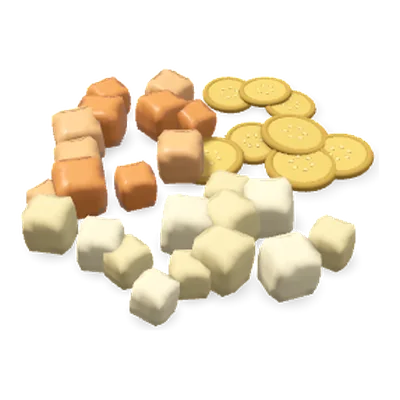
The safe starches
Perfect Health Diet calls white rice, potatoes, sweet potatoes, taro and winter squash safe starches, and its daily plan has about a pound of them. In Sahni, white rice is its own food group, apart from bread and pasta, and potatoes and white rice can stand in for each other.
Why white rice and not other grains
The framework leaves out grains other than rice. Sahni's recipes follow it: a recipe built on another grain is made with white rice instead.
Potatoes and potassium
Sahni's potassium target is 4.7 g a day. Reaching it takes potassium-rich plants, so Perfect Health Diet has potatoes, sweet potatoes and taro more often than white rice, along with beets, carrots, bananas, avocado, leafy greens and tomatoes. With kidney disease there's no potassium target, because your kidney team sets it.
Starch in place of sugar
Perfect Health Diet swaps sugar for starch. When juice, sweet drinks or sweets pass about a twentieth of your calorie target, Coach suggests whole fruit instead.
How Coach uses them
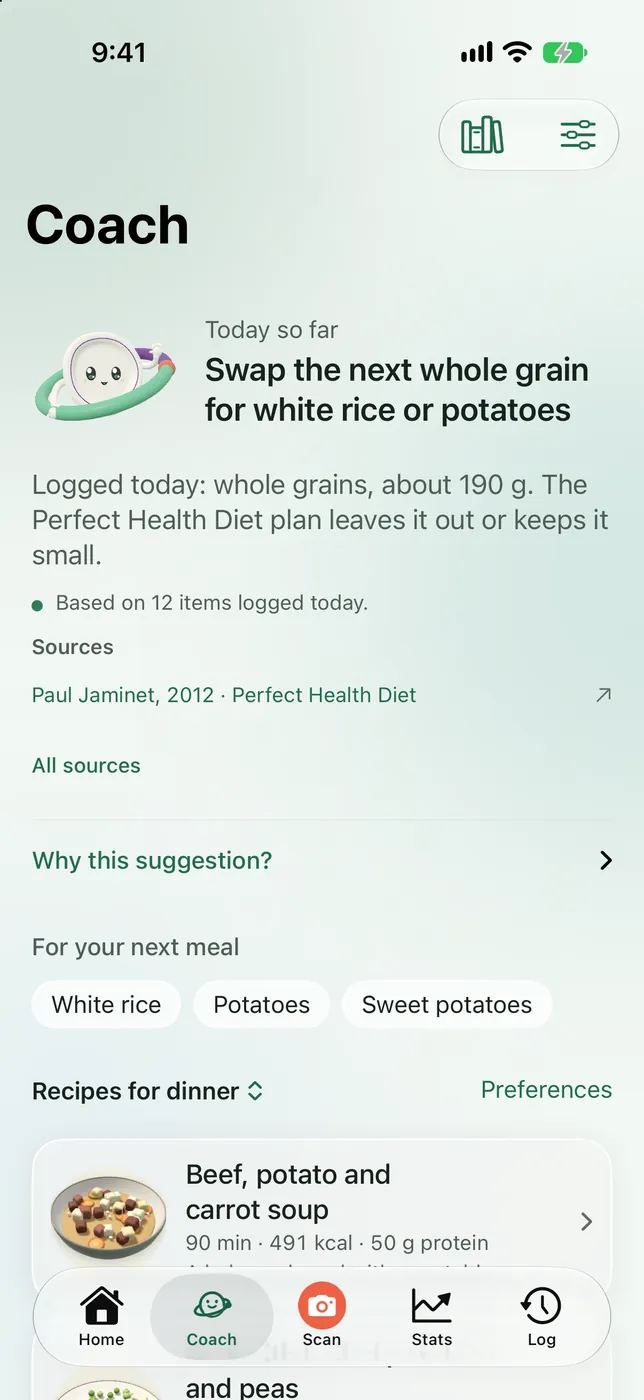
When a food your eating style keeps small adds up during the day, Coach suggests a swap for the next one. For whole grains, that's the suggestion in the picture below: "Swap the next whole grain for white rice or potatoes." On a day with little logged, it suggests building the meal around protein, a starch and vegetables.
Cooking them
Perfect Health Diet prefers boiling and steaming starches to roasting or frying them at high heat. Potatoes and starches cooked and then cooled carry resistant starch, which it counts among the useful kinds of fiber.
Limits that still apply
Sahni never sets a target under 1,300 kcal for women or 1,500 kcal for men (1,400 kcal if you'd rather not say), or over 4,500 kcal. Under 18 there's no deficit at all, and below a BMI of 20 the loss is capped. With an eating-disorder history, a BMI under 18.5, or pregnancy, breastfeeding, kidney disease or type 1 diabetes without a clinician's supervision, Sahni keeps your targets at maintenance and asks you to confirm them with your clinician.
On a day over target there's nothing to make up: the next meal is planned as a normal one.
Sources
- Perfect Health Diet: Regain Health and Lose Weight by Eating the Way You Were Meant to EatPaul Jaminet, Ph.D., and Shou-Ching Jaminet, Ph.D. (foreword by Mark Sisson), 2012
Sahni works these numbers out from two minutes of questions and checks each meal you photograph against them, on your iPhone.

Next: Calorie deficit: how many calories to eat to lose weight